Disclosure Some links on this page are affiliate links. If you book through them we earn a small commission, at no extra cost to you — it is what keeps this guide free and independent. How we make money.
The short version: Crete is one of the safest places in Europe for a visitor, and violent crime against tourists is rare enough not to shape your planning. The genuine risks are environmental, in roughly this order: heat and sun, driving on mountain roads, the sea — currents, wind and sea urchins — and gorge walking in inadequate footwear. Every one of those is manageable, and almost every incident involving a visitor comes from underestimating one of them.
Crime: The Honest Picture
This is the question most people are asking, and the answer is undramatic: Crete is very safe. Greece ranks well among European countries for visitor safety and Crete is an ordinary part of that. Violent crime against tourists is rare enough that it should not shape your planning.
Petty theft exists where crowds and distraction do — busy markets, packed beaches, resort nightlife — and responds to the same precautions as anywhere: do not leave a bag on a sunbed while you swim, do not leave anything visible in a parked hire car, and use the room safe.
The genuine risks in Crete are environmental. Everything below is more likely to affect your trip than crime is.
The Sun Is the Real Risk
Consistently the thing that most affects most visitors, and the most underestimated.
Crete sits further south than Tunis. July and August regularly exceed 35°C, the light is fierce, and the sea breeze is deceptive — it removes the sensation of burning without reducing the burn. Heat exhaustion and serious sunburn are ordinary occurrences here, not exotic ones.
What actually works: avoid direct sun between roughly noon and four, which is also when the locals do not. Carry more water than feels necessary, particularly on any walk. Wear a hat that stays on in wind. Reapply sunscreen after swimming rather than once in the morning. And take the shade seriously on a boat — a deck reflects light from below as well as above, which is why boat trip sunburn is so reliably worse than beach sunburn.
Children and anyone over seventy dehydrate faster. Plan around them, not around the fittest person in the group.
Driving and the Roads
The second real risk, and the one most within your control.
The national road along the north coast is a good, fast dual carriageway for much of its length and presents no unusual difficulty.
Everything else can. Mountain roads narrow without warning, switchback steeply, lose their white lines and occasionally their surface. You will meet goats on blind bends, agricultural vehicles taking the whole width, and local drivers who know the road far better than you and overtake accordingly. The local convention of pulling onto the hard shoulder to let faster traffic pass is genuinely useful once you understand it.
The single most expensive mistake is taking a standard hire car onto an unmade track — most famously the approach to Balos. Nearly every rental contract on the island excludes unsurfaced roads, so a puncture or a cracked sump there is entirely yours. Our car rental guide covers the insurance question and what to do after an accident or breakdown covers the aftermath.
Drive slower than you would at home, sound the horn approaching blind bends, and do not attempt mountain roads for the first time at night.
Hire cover that includes the excess
Local Cretan operators typically include full insurance with no excess and no card block — which matters more here than in flatter countries. It does not extend to unmade tracks; nothing does.
The Sea
Beautiful, generally safe, and worth understanding in three respects.
The meltemi. The summer north wind can build through the day and turn a flat morning sea into a rough afternoon one. It creates currents and undertow, and it is why boat trips get cancelled. Swim in the morning if the forecast is windy, and take a cancellation as a good decision rather than a lost day.
Unguarded beaches. Organised beaches have sunbeds, facilities and sometimes lifeguards and flags. Most of Crete's beautiful ones have none of that. If you are swimming somewhere remote, swim with someone, stay within your depth and abilities, and do not rely on anyone noticing.
Sea urchins. The commonest injury by a distance. They sit on rocks in shallow water and the spines break off in your foot. Water shoes on any rocky entry solve it entirely, and Seitan Limania is one of several places where they are worth wearing.
Gorges and Hiking
The Samaria Gorge is the one that generates rescues, and the reasons are consistent: people arrive in unsuitable footwear, carry too little water, and underestimate a 16 km one-way descent that has no exit halfway and finishes at a village reachable only by boat.
It is not a technical walk and thousands complete it happily every week in season. It is, however, five to seven hours on rough rock in heat, and the last bus and the last boat do not wait. Take proper shoes, start early, carry water, and turn back within the first hour if it is not working — after that, there is no turning back.
The park closes in extreme heat, high wind or fire risk. Those closures are safety decisions and are not negotiable; our hiking guide covers the shorter gorges that make good alternatives.
Wildlife, Honestly
An unusually short section, and a genuinely reassuring one.
Crete has no snakes dangerous to humans. That is unusual for the Mediterranean and worth knowing if snakes are something you worry about.
The realistic list is: sea urchins (above), mosquitoes in summer evenings, weever fish occasionally buried in shallow sand — painful, rarely serious, treated with hot water — scorpions, small and roughly wasp-equivalent, and stray dogs and cats, which are common, generally healthy and almost always uninterested in you.
Nothing on that list should change a single plan.
Earthquakes and Wildfires
Earthquakes. Crete is seismically active and minor tremors happen. Damaging earthquakes are infrequent and buildings are constructed with this in mind. It is not a reason to reconsider a trip.
Wildfires are the more practical summer concern across Greece generally. The sensible posture is simple: do not light anything outdoors in dry conditions, note that parks and gorges close on high-risk days, and follow local instructions immediately and without debate if any are issued.
Solo and Women Travellers
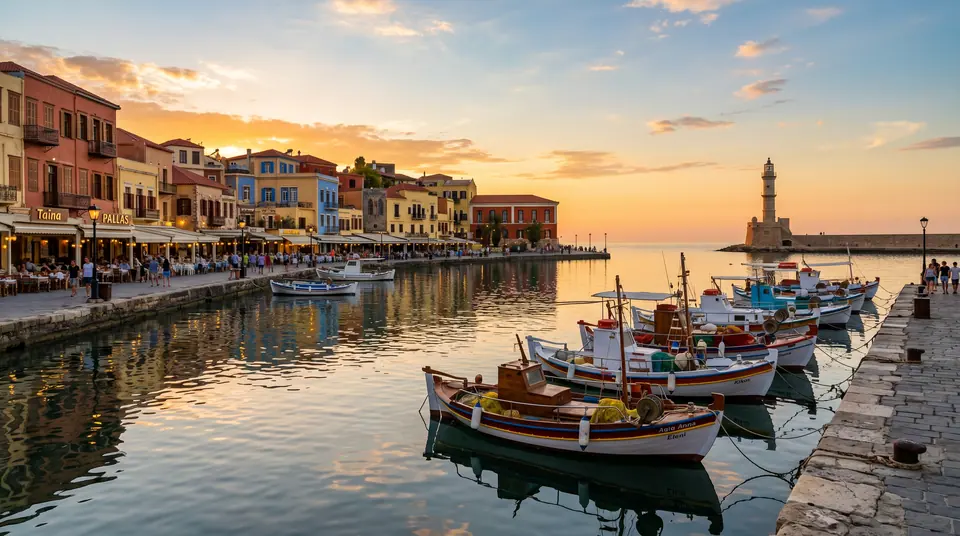
Crete is widely considered one of the more comfortable Mediterranean destinations for solo travel, and Chania especially so — the Old Town is busy into the evening, the centre is well lit, and the general atmosphere is relaxed rather than watchful.
The commonest reported annoyance is persistent attention rather than threat, and it is far more associated with nightlife on the resort strips than with the Old Town or the villages. Our solo travel guide goes into where to stay and what the social side actually looks like.
Numbers and Practicalities
- 112 is the pan-European emergency number and works in Greece, in English.
- Pharmacies are excellent, widespread and can advise on and dispense a great deal without a prescription. For most minor problems, a pharmacy is the right first stop rather than a clinic.
- Chania has a general hospital and private clinics; serious cases are transferred to Heraklion or Athens.
- EHIC/GHIC covers state healthcare for eligible visitors but is not travel insurance — it will not repatriate you and will not cover the private clinic you may be taken to first.
- Tap water in Chania is generally considered safe to drink; many visitors and locals prefer bottled for taste. In remote villages, ask.
- Insurance should explicitly cover hiking, any water sports you plan and driving. What actually matters in a policy goes through the exclusions that catch people.
Crete Safety: FAQ
Is Crete safe for tourists?
Very. Greece consistently ranks among the safer countries in Europe for visitors, and Crete is an unremarkable part of that picture — violent crime against tourists is rare, and the everyday atmosphere in Chania and the villages is relaxed. Petty theft exists in crowded tourist areas as it does anywhere, and is best handled with ordinary precautions. What actually injures visitors here is environmental rather than criminal: heat, roads, sea and terrain, in that order.
Is it safe to drive in Crete?
It is safe if you drive conservatively, and it is the most likely way a holiday here goes wrong if you do not. The national road along the north coast is straightforward. Away from it, roads narrow, switchback, lose their markings and sometimes their surface, and you will meet goats, agricultural vehicles and confident local drivers overtaking on bends. Add a distracted driver on an unfamiliar road with a hire car and the risk becomes real. Drive slowly, use the horn on blind bends, and do not take unmade tracks in a standard rental — your insurance almost certainly excludes them.
Is the sea safe for swimming in Crete?
Usually, with two things worth respecting. The north coast is exposed to the meltemi, the summer north wind, which can turn a calm morning into a rough afternoon and create strong currents and undertow — and many Cretan beaches are unlit, unguarded and unflagged outside the organised ones. Sea urchins are the other everyday hazard, common on rocky entries and genuinely painful to stand on. Swim at organised beaches when you can, respect any flag system that exists, and wear something on your feet on rocks.
Are there dangerous animals in Crete?
Essentially no. Crete has no venomous snakes dangerous to humans — an unusual and genuinely useful fact for a Mediterranean island — and no large predators. The realistic list is small: sea urchins on rocky shorelines, the occasional weever fish buried in shallow sand, mosquitoes in summer, and stray dogs which are common and almost always harmless. Scorpions exist but are small and their sting is comparable to a wasp. Nothing here should affect your plans.
Do you need travel insurance for Crete?
Yes, and more than for a city break. The specific reasons are the things on this page: a hire car on mountain roads, gorge walking on rough terrain, boat trips, and swimming from unguarded beaches. Check that your policy actually covers hiking, any water sports you plan, and that it does not exclude driving. An EHIC or GHIC card covers state healthcare for EU and UK visitors but is not a substitute for insurance — it will not repatriate you or cover a private clinic, which is often where you end up first.
Is Crete safe for solo female travellers?
It is generally regarded as one of the easier Mediterranean destinations for solo women, and Chania in particular is relaxed, well lit in the centre and busy into the evening. The usual sensible precautions apply and nothing beyond them is typically needed. The commonest reported annoyance is persistent attention rather than threat, most often in nightlife areas on the resort strips rather than in the Old Town or the villages.
Are earthquakes or wildfires a risk in Crete?
Crete sits in a seismically active region and small tremors are a normal, generally unremarkable occurrence. Damaging earthquakes are infrequent, buildings are constructed accordingly, and this should not influence whether you visit. Wildfire is the more practical seasonal concern in high summer across Greece, and the sensible response is to follow local instructions immediately if any are issued, avoid lighting anything outdoors in dry conditions, and note that the Samaria Gorge and other parks close in extreme heat or fire risk — a closure is a safety decision, not an inconvenience to argue with.
Practical follow-ups: car rental and whether you need an IDP, the Samaria Gorge if you plan to walk it, and when to visit if avoiding the worst of the heat matters to you.