Disclosure Some links on this page are affiliate links. If you book through them we earn a small commission, at no extra cost to you — it is what keeps this guide free and independent. How we make money.
In summer you can get by in Crete without a car if you stay in a city and book tours for the big days out. In winter that stops being true, and the reason is not the weather — it is the timetable. This guide covers what actually changes between November and April: which roads are affected, what the buses do, what winter hire costs, and the insurance details that only bite in the wet months.
Quick Answer
A car matters more in winter than in summer. KTEL buses run reduced timetables and the seasonal beach and trailhead routes stop entirely, so the island outside the two cities becomes hard to reach without one. Rates are the cheapest of the year, especially over multiple weeks. Snow affects the mountain roads only — the Chania–Heraklion coastal highway stays clear. The real winter constraints are daylight (dark by about 17:30 in December) and wet, debris-strewn rural bends, not snow.
Why Winter Is the Season You Actually Need One
Crete's bus network is built around the summer economy. From roughly November the KTEL timetables thin out, and — more importantly — the seasonal routes disappear altogether. Those are exactly the ones that carry visitors: the services to the beaches, the connections to gorge trailheads, the resort shuttles along the north coast. What remains is the year-round intercity backbone, principally Chania–Rethymno–Heraklion, running less often than in August.
The practical consequence: in July you can reach a great deal of Crete on a bus and a tour booking. In January you can reach the two cities and the towns on the main road. Everything else — the mountain villages, the south coast, the inland tavernas that are at their best in winter, the trailheads for the gorges that stay open — is a car journey or it does not happen.
This cuts both ways, and it is worth being honest about it. If your winter trip is a three-day city break in Chania, you do not need a car and parking in the Old Town will annoy you. If your trip is a week or more, or has any interest in the interior, a car stops being optional.
Winter Rates Are the Lowest of the Year
LocalRent lists the Cretan companies the international brokers don't carry, and their rates normally include full cover with no large deposit blocked on your card — which matters more in winter, when the damage risks are weather-related. Discover Cars reaches the international brands, worth a check if you are arriving on a late connecting flight through Athens, since their airport desks stay staffed for the final arrivals. Off-season the two often differ by a wide margin, so run both.
Which Roads Are Actually Affected
Crete's winter road picture is simpler than people expect, because the island is effectively two driving environments.
Clear essentially all winter
- The north coast highway (the E75 spine, Chania–Rethymno–Heraklion). This is a dual carriageway at sea level and stays open year-round. It is the road that makes a winter trip logistically easy.
- Both airport roads, and the roads within and immediately around both cities.
- The Souda and Heraklion port approaches — the year-round ferries need them.
- Most low coastal roads west of Chania and east of Heraklion.
Genuinely affected
- The climb to the Omalos plateau above Chania — the Samaria trailhead road. Snow closes it periodically from December to March, and the gorge is shut anyway.
- Mountain crossings to the south coast, including the Imbros–Chora Sfakion road. Usually passable, occasionally not, and slow when wet.
- Psiloritis and the high inland villages behind Heraklion.
- Unsealed tracks generally — the Balos access road being the notorious one, best avoided year-round in a hire car and genuinely bad in the wet.
Snow closures are usually short — a day or two after a heavy fall — and they are announced locally rather than on any reliable English-language source. The workable habit is to ask at your accommodation before committing to a mountain route, and to have a coastal alternative in mind.
What Winter Driving Is Actually Like
The hazards change rather than intensify. Summer's problems — dense traffic, tired drivers, sun glare on the afternoon descent, holiday drivers on unfamiliar roads — mostly evaporate. In their place:
- Daylight is the big one. Sunset is around 17:00–17:30 through December and early January. A mountain drive that feels relaxed at 19:00 in July has to be done by mid-afternoon in winter, and unlit rural roads with unguarded drops are a different experience in the dark.
- Wet bends collect debris. After heavy rain, mountain roads pick up mud, gravel and small rockfall on the outside of bends. This is the most common genuine winter hazard, and the answer is simply slower cornering.
- Drainage on rural roads is poor. Standing water and short washouts appear after storms, particularly on the south-coast descents.
- Village roads narrow and stay narrow. Unchanged from summer, but you are more likely to be inland in winter, so you meet them more often.
- Fewer petrol stations open late. Off-season, rural stations keep shorter hours. Filling up in a city rather than counting on a village pump is worth the habit.
None of this makes winter driving difficult for a competent driver. It makes it a daylight activity with more margin than you would leave in August.
What Winter Hire Actually Costs
Winter is the cheapest hire of the year, by a wide margin, for the simple reason that the fleet is idle. Rates start below the shoulder-season floor and fall further on longer bookings — a month in January is priced very differently from a month in July, and long winter rentals are one of the few areas in Cretan tourism where there is genuine negotiating room.
Two off-season caveats that catch people out:
- Smaller fleets, shorter hours. Many local offices reduce both over winter. Walk-up availability is not reliable in the way it is in May, and a late arrival may find a city-centre office closed. Book ahead and confirm the collection time.
- Automatics are scarcer, not cheaper. Local fleets are manual-heavy year-round, and the winter fleet is a reduced version of the summer one. If you need an automatic, the low season does not make it easier to find — see automatic car rental in Crete.
If you are staying for a month or more — the winter remote-work pattern — price the monthly rate against a week-by-week booking before committing. They are often not the same number, and for stays over about three weeks the monthly rate usually wins clearly.
Insurance: the Winter-Specific Part
The cover you want does not change much, but which exclusions matter does. In summer the common claims are car-park scrapes and kerbed alloys. In winter they are weather-related, and weather-related damage is where the small print lives.
- Check whether flood or water damage is excluded. Standing water after a storm is the most plausible winter incident on the island, and it is a common exclusion.
- Check the unsealed-road clause. Almost every policy voids cover off sealed roads. This rules out several winter routes people otherwise assume are fine, and it is the reason the Balos track is a bad idea in a hire car at any time of year — see our note on what to do after an accident or breakdown.
- Rockfall and falling-object damage sits in a grey area on some policies. Worth a direct question if you plan mountain driving.
- Deposit size matters more when the risk is higher. A €1,000-plus hold on your card for a month-long winter rental is a meaningful amount of money to have frozen.
Practically: the local Cretan operators tend to include comprehensive cover in the headline rate and hold little or no deposit, which is the cleaner shape for a winter booking. The international brands usually show a lower daily rate and sell the cover at the desk. Compare the all-in number, not the headline — the same advice as any season, but the gap is wider off-season. Our full car rental guide covers the companies in detail, and travel insurance for Crete covers the separate question of your own policy.
Price It Both Ways Before You Book
For a winter trip, compare the all-in figure with cover included — not the daily headline. LocalRent for Cretan companies with comprehensive cover and no large deposit; Discover Cars for the international brands and staffed late-arrival desks. Five minutes, and off-season the two regularly differ by a wide margin.
Frequently Asked Questions
Do you need a car in Crete in winter?
More than in summer. KTEL buses run reduced winter timetables and the seasonal routes serving beaches and trailheads stop entirely, so anything outside the two city centres is hard to reach by public transport. Both old towns stay fully walkable without one. But mountain villages, the south coast, gorge trailheads and inland tavernas effectively require a car from November to April.
How much does car rental in Crete cost in winter?
Winter is the cheapest of the year. Small-car rates start below the shoulder-season floor and multi-week rates fall further — the fleet is idle, so long winter bookings have real negotiating room. Prices climb from around Easter. The trade-off is choice: reduced winter hours and smaller fleets mean you should book ahead rather than count on walk-up availability.
Does it snow in Crete, and do I need winter tyres?
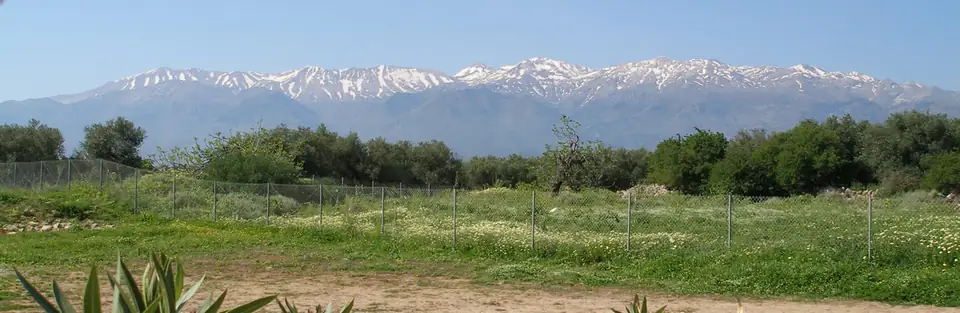
It snows in the mountains, not on the coast. The Lefka Ori and Psiloritis hold snow from roughly December to April and roads climbing into them — the Omalos plateau approach above Chania especially — can close after heavy falls. The coastal highway stays clear essentially all winter. Greek hire cars are not fitted with winter tyres as standard and you won't usually be offered them; the practical answer is to avoid mountain routes when snow is forecast rather than to equip for it.
Is driving in Crete dangerous in winter?
The risks change rather than increase. Summer's heavy traffic and unfamiliar holiday drivers largely disappear. Winter brings wet roads, poor rural drainage, mud and rockfall washed onto mountain bends after heavy rain, and much shorter daylight. The biggest practical difference is the light — dark by about 17:30 in December, so a mountain descent you'd happily do at 19:00 in July needs finishing hours earlier.
What insurance do I need for a winter rental in Crete?
The same cover you'd want in summer, but the winter hazards make the excess likelier to matter. Full cover with no large card deposit is the useful shape. Check whether the policy excludes flood damage, rockfall, and driving on unsealed roads — the last is a common exclusion that rules out several winter routes. Local Cretan companies typically include comprehensive cover in the headline rate; the international brands usually sell it at the desk on top of a cheaper-looking price.
More winter planning: Winter in Crete hub · Winter hiking · A cosy 3-day winter itinerary · Working remotely here in winter