Disclosure Some links on this page are affiliate links. If you book through them we earn a small commission, at no extra cost to you — it is what keeps this guide free and independent. How we make money.
In 2025, TripAdvisor's Travellers' Choice Awards confirmed what those who've been here already knew: Elafonissi beach in Chania, Crete is officially the best beach in the world. Not just in Greece. Not just in Europe. The entire world. For a stretch of coastline on the southwestern tip of Crete to beat out competition from the Maldives, the Caribbean, and Southeast Asia is extraordinary — and entirely deserved.
This is the most complete Elafonissi beach Chania Crete guide you'll find. Whether you're driving from Chania, looking for the best time to visit, wondering why the sand is pink, or trying to avoid the worst of the summer crowds, this page covers everything you need to plan a perfect day here.
What Makes Elafonissi So Special?
Most world-class beaches are beautiful because of one thing — crystal water, dramatic cliffs, or perfect sand. Elafonissi has several things working simultaneously in its favour, which is why no photograph ever quite does it justice.
The Pink Sand
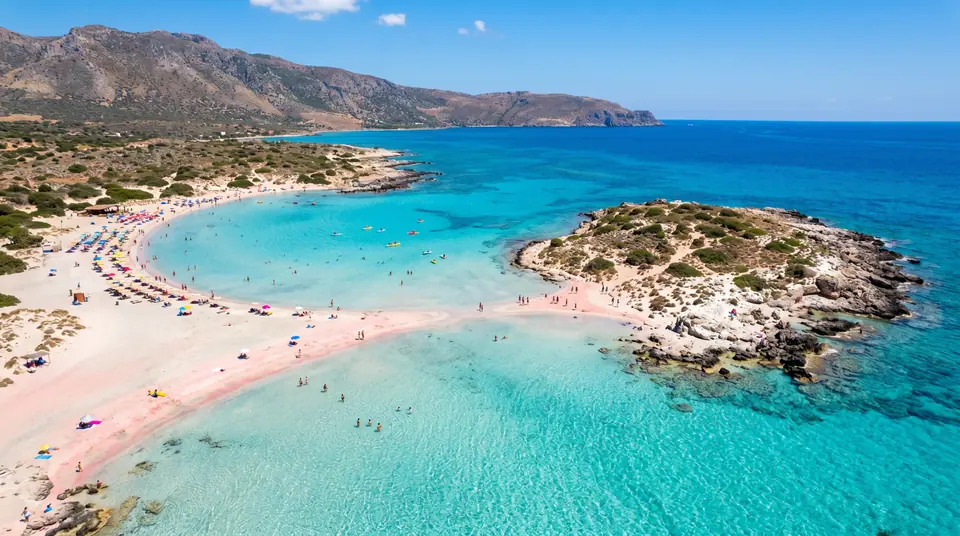
Elafonissi's signature colour is produced by a remarkable natural process. The white sand is mixed with fragments of crushed shells from Posidonia oceanica sea plants, combined with tiny particles of red coral and pink-toned marine algae. Over centuries, wave action has pulverised these organic materials into a fine powder that blends with the quartz sand. The result is a blushed, rose-gold hue that varies in intensity across the beach — most vivid near the island crossing and in the shallows where the water amplifies the colour.
The Tidal Island
Technically, Elafonissi is a tidal island. At low tide, a shallow sandbar is exposed that allows you to wade across — waist-deep or shallower — to a small uninhabited island. The crossing itself, through warm shallow water, is part of the experience. The island side has additional coves and the most intensely pink sand deposits on the entire beach. Most visitors never make it across; those who do are rewarded with far fewer crowds and the best photo opportunities.
Impossibly Shallow, Turquoise Water
The lagoon-like conditions on the mainland side mean the water graduates from ankle-deep to waist-deep across a vast expanse of beach. The bottom is sand, not rocks, and the colour moves through mint green, turquoise, and deep azure depending on depth and angle of light. It's unusually safe for children and produces the kind of postcard-blue photographs that are difficult to achieve without extensive editing anywhere else in Greece.
A Protected Nature Reserve
Elafonissi is a designated nature reserve and Natura 2000 protected habitat. This means no permanent constructions, no beach bars, no development — just the beach as it has always been. The protected status is the main reason it remains as pristine as it does despite receiving enormous visitor numbers in summer.
Practical Information at a Glance
Elafonissi Beach — Key Facts
Getting to Elafonissi from Chania
Elafonissi is 75 km southwest of Chania city. The journey is straightforward but not fast — the final section involves a winding mountain road through the White Mountains — which makes early departure all the more worthwhile in summer.
Option 1: Rent a Car (Recommended)
Renting a car is by far the best way to visit Elafonissi. You control when you arrive (critical in July and August when the car park fills before 9am), how long you stay, and can easily combine the trip with nearby Falassarna Beach on the return journey.
Route from Chania: Take the E75 motorway west, follow signs toward Kissamos (Kastelli), then turn south at Platanos. Follow the well-signed road south through the village of Kefali down to the coast. The road surface is good until the final few kilometres, which are narrow and winding — take it steady.
Parking at the beach is a large free car park. In July and August it fills completely by 9:00am, and road queues form from around 8:30am. Arriving before 8:30am on peak summer days is not an exaggeration — it makes the difference between an easy visit and a frustrating one.
🚗 Compare Car Hire Prices for Chania
A rental car is the cheapest and most flexible option for 2+ people. Prices from Chania Airport (CHQ) start from around €25–35/day in shoulder season. Compare across all major suppliers in one search.
Option 2: Guided Day Trip Tour
Several tour operators run day trips to Elafonissi from Chania, often combining the beach with a stop at Falassarna or lunch at a local taverna. Trips typically depart at 8–9am and return by 6–7pm, costing between €35–60 per person. This is a good option if you don't want to drive, or if you're travelling solo.
Editor's PickElafonissi & Elos Village Day Trip — GetYourGuide — this is the exact tour I took, including a stop at the traditional chestnut village of Elos on the way back. One of the best day trips I've had in all of Crete. Highly recommended.
→ Browse All Chania Day Trips on GetYourGuide — if you prefer to compare options or combine Elafonissi with other west Crete highlights like Falassarna or the Elos chestnut village, browse the full listings here.
The downside is that tour groups arrive mid-morning when the beach is already getting busy. If your priority is experiencing Elafonissi at its quietest, a self-drive early start beats any organised tour.
🎟 Book an Elafonissi Day Tour
Browse guided day tours from Chania with free cancellation on most bookings. Many tours include both Elafonissi and Falassarna.
Option 3: KTEL Bus
A seasonal KTEL bus service runs directly from Chania Bus Station to Elafonissi, operating approximately June through September. The bus runs once or twice daily and costs around €10–12 each way, making it the cheapest option. The tradeoff is limited schedule flexibility — you can't leave early enough to beat the crowds, and you're tied to the return departure time. Check the current timetable at Chania Bus Station or the KTEL Chanion website.
🏨 Where to Stay Near Elafonissi
The nearest base with hotels and restaurants is Kissamos (Kastelli), about 20 km north. Staying here lets you arrive at Elafonissi before the crowds. A few small guesthouses also operate in Platanos, just 7 km away. Booking early is essential in summer — these rooms sell out fast.
Best Time to Visit Elafonissi Beach
May and September are the best months to visit Elafonissi. The sea is warm (21–24°C), all facilities are open, and the beach is a fraction of its August capacity. Early October is also excellent — sea temperature drops slowly, crowds thin quickly, and the light is extraordinary for photography.
In July and August, Elafonissi receives over 2,000 visitors per day at its peak. The beach is large enough that it never feels quite as oppressive as some European summer hotspots, but the car park queues, road congestion, and competition for sunbeds are very real. If you're visiting in peak season, your single most important move is arriving before 8:30am.
| Month | Sea Temp | Air Temp | Crowds | Recommendation |
|---|---|---|---|---|
| January | 16°C | 13–16°C | Empty | Off-season |
| February | 16°C | 13–17°C | Empty | Off-season |
| March | 17°C | 15–19°C | Empty | Off-season |
| April | 18°C | 18–22°C | Very low | Shoulder |
| May | 21°C | 22–26°C | Low | Ideal |
| June | 23°C | 25–29°C | Moderate | Very Good |
| July | 25°C | 28–32°C | Very high | Arrive Early |
| August | 26°C | 29–33°C | Extreme | Before 8:30am |
| September | 24°C | 25–29°C | Low–Moderate | Ideal |
| October | 22°C | 20–25°C | Very low | Excellent |
| November | 19°C | 17–21°C | Empty | Off-season |
| December | 17°C | 14–18°C | Empty | Off-season |
Essential Tips for Visiting Elafonissi
- Bring your own food and water. There are two small café/snack bars at the beach, but they are basic, often crowded, and expensive. Pack a cool bag — you'll be glad you did.
- The best pink sand is near the island crossing. Head to the far right section of the beach (when facing the sea) and wade across to the small island. The sand there has the most intense pink colouration and fewer visitors.
- Snorkelling around the island is excellent. The rocky perimeter of the tidal island has clear, calm water and good visibility. Bring your own mask and fins — rentals are not available.
- There is no natural shade. Unlike forest beaches, Elafonissi has no trees. Sun protection — high-factor sunscreen, hats, and rash vests for children — is absolutely essential, especially in the midday heat.
- Dogs are only permitted October–April. Between May and September, dogs are prohibited to protect nesting birds and the protected habitat. Check local rules before bringing pets.
- The drive back is slower in summer. After a full day, road congestion on the single mountain road back north can add 30–45 minutes to your return. If driving to Chania, consider leaving before 5pm to avoid the worst of it.
- The water is safe for young children. The lagoon side is extremely shallow across a vast area, making it unusually safe for toddlers and non-swimmers compared to most Mediterranean beaches.
- Phone signal is weak. Download offline maps (Google Maps or Maps.me) before you leave Chania. Navigation to the beach is straightforward but the final section of road has very limited signal.
Nearby Beaches Worth Combining
Elafonissi's location in the far southwest of Crete means most visitors come specifically for the beach and return the same day. If you're renting a car and want to extend the trip, these two beaches pair well:
20 km north · ~30 min drive
Falassarna Beach
A wide, sandy stretch with crystal-clear water and several waterfront tavernas. Consistently ranked among Greece's best beaches and far less crowded than Elafonissi. Perfect for a return stop on the drive back to Chania.
75 km northeast · ~1 hr 30 min drive
Balos Lagoon
Crete's other legendary pink-sand lagoon on the Gramvousa peninsula — equally stunning, equally iconic. Reach it by boat from Kissamos harbour or via a steep 20-minute hike from the car park. An epic combination if you base yourself near Kissamos and do both beaches across two days.
See the full Chania beaches guide for distances, conditions, and tips on all the best beaches in the region.
Ready to Plan Your Elafonissi Visit?
Use the links below to sort the three essentials — transport, accommodation, and tours — in one place. Book early for summer visits: Kissamos hotels and guided tours both sell out well in advance.
Elafonissi Beach FAQ
Why is Elafonissi sand pink?
Elafonissi's distinctive pink sand is created by a natural mix of crushed white shells from Posidonia sea plants and tiny fragments of red coral and pink marine algae. Over centuries, wave action has broken these organic materials into fine particles that blend with the white quartz sand, producing the blush-pink colour that is most vivid in the shallows and along the water's edge near the island crossing.
How far is Elafonissi from Chania?
Elafonissi is approximately 75 km from Chania city centre. The drive takes around 1 hour 30 minutes via the E75 motorway west towards Kissamos, then south through Platanos. The road is scenic but winding in the final section, so allow extra time during July and August when traffic builds up on the approach road.
What is the best time to visit Elafonissi beach?
May and September are the best months to visit Elafonissi. The sea is warm, all facilities are open, and crowd levels are a fraction of the July–August peak. In August, the beach can receive over 2,000 visitors per day — arrive before 8:30am or consider a shoulder-month trip for a more relaxed experience.
Can you swim at Elafonissi in October?
Yes. The sea around Elafonissi remains warm and swimmable throughout October, typically 22–24°C. Crowds thin dramatically after mid-September, making early October one of the most enjoyable times to visit. Note that dogs are permitted on the beach from October onwards, and some café facilities may begin to wind down later in the month.
Is there a bus from Chania to Elafonissi?
Yes, KTEL operates a seasonal bus service from Chania bus station directly to Elafonissi, running from approximately June through September. The service runs once or twice daily. It is the cheapest option (around €10–12 each way) but limits your flexibility and departure times. For the most current schedule, check the KTEL Chanion website or ask at Chania bus station.
Is Elafonissi worth the trip from Chania?
Absolutely. The 1 hour 30 minute drive is one of the most scenic in Crete, passing through the White Mountains and small villages before reaching the coast. The beach itself — pink sand, lagoon-depth turquoise water, and a protected tidal island — is genuinely unlike anything else in Greece. On a good day in May, June, or September it comfortably lives up to its world's-best reputation. Even in August, an early start transforms what could be a crowded beach day into a genuinely special experience.
This article contains affiliate links. If you book through them, we may earn a small commission at no extra cost to you. This helps us keep the guides free and up to date.