Disclosure Some links on this page are affiliate links. If you book through them we earn a small commission, at no extra cost to you — it is what keeps this guide free and independent. How we make money.
Cretan food is one of the great surprises of European travel — earthier, more generous and more distinctly its own than the mainland Greek cuisine most visitors expect. Centuries of Minoan, Byzantine, Venetian and Ottoman influence have produced something remarkable: a cuisine so healthy it helped create the Mediterranean Diet, and so flavourful that you'll be recreating it at home. Chania is the best city on the island to eat it. This guide covers the 15 dishes you must try, where the locals eat, and the places worth a reservation.
How a Cretan Meal Works
Before getting into the dishes, understanding the rhythm of eating in Crete will improve your experience significantly. A proper Cretan meal is built around mezedes [meh-ZEH-des] — small shared dishes, similar in spirit to Spanish tapas. They arrive first: dakos, crispy feta, tzatziki, maybe a saganaki. Then mains. Then complimentary sweets and raki. The whole thing takes two to three hours, and that is exactly the point.
Two things will surprise you at the end of the meal. First, almost every taverna brings a complimentary raki and dessert to the table — it is hospitality, not a mistake, and refusing it is faintly rude. Second, the bill will be smaller than you expected. Eating in Chania remains genuinely good value compared to most of western Europe, even in peak season.
A note on Cretan cheese: You will encounter myzithra (fresh, mild, slightly sweet — used in dakos, kalitsounia and bougatsa), graviera (hard, aged, nutty — excellent fried as saganaki), and pichtogalo chanion — a creamy spreadable cheese unique to Chania with PDO protection. You cannot buy it outside Crete. Eat it with bread.
15 Must-Try Dishes in Chania
These are not tourist approximations — they are the dishes that define Cretan food culture, sourced from producers who have been making them for generations.
Crete's answer to bruschetta — and arguably better. A thick, twice-baked barley rusk (paximadi) soaked briefly in olive oil, piled with crushed fresh tomatoes, crumbled myzithra, dried oregano and another pour of Cretan oil. Best in summer when local tomatoes are at peak ripeness.
Warm, flaky phyllo filled with myzithra cheese (not the sweet semolina custard of the Thessaloniki version), served in hot squares buried under powdered sugar and cinnamon. The combination of savoury cheese with the sweet topping is immediately, obviously correct.
Small hand-formed pastries with a myzithra and honey filling (sweet) or wild greens (savoury). Made in two traditional shapes — round lychnarakia and square anevata. Found in bakeries year-round but at their absolute peak around Easter.
A pan-fried cheese pie from the remote Sfakia region of southern Crete. Made with local myzithra and cooked in a dry pan until golden and slightly crispy, then served warm with generous thyme honey. The Cretan equivalent of comfort food — distinctly local, impossible to find elsewhere.
Western Crete's version of this baked casserole: thin slices of courgette and potato layered with myzithra or feta and fresh mint. It arrives warm, cheesy and satisfying. The mint cuts through the richness in a way you won't expect. An excellent vegetarian main.
Cretan smoked pork unlike anything on the mainland. Lean pork is marinated in vinegar and herb oil, then slowly smoked over sage, thyme and aromatic herbs. Intensely flavoured, slightly tangy. Served in thin slices as part of a meze platter or tucked into salads.
Stamnagathi is a wild bitter green that grows only in Crete's mountains — you cannot eat this dish anywhere else. It is slow-cooked with local lamb, olive oil, lemon and herbs until deeply tender. The bitterness of the greens cuts through the richness of the lamb in a way that has fed Cretans for centuries. Spring and early summer only.
Crete's aged hard sheep's milk cheese — one of just 24 Greek products with EU PDO protection — fried or baked in a small pan until deeply golden, then drizzled with local honey. The combination of salty, crispy and floral sweet is one of the defining flavours of any Cretan meal.
Wedding rice — literally. Rice slow-cooked in a rich broth of boiled lamb or goat, finished with lemon and staka (a deeply flavoured clarified butter made from goat's milk). Traditionally served at Cretan weddings; now found on restaurant menus across the island. Simple, hearty and unlike any rice dish you have had before.
Pan-fried snails in olive oil with rosemary, deglazed with vinegar. Crete has over 40 ways of preparing snails — this is the most beloved. Crunchy on the outside, tender in the middle, tasting of the hillside herbs the snails have been eating. Minoan-era roots. Not on every menu, but when you see it, order it.
Crispy tomato fritters — ripe summer tomatoes mixed with feta, basil and oregano, deep-fried until golden. Easy to overlook if you have gone straight for the dakos, but a mistake not to order. The courgette version (kolokithokeftedes) is equally good.
Small balls of yeasted dough fried until golden, drizzled with thyme honey and dusted with cinnamon and crushed walnuts. Lighter and less sweet than a doughnut. Best eaten warm from a dedicated loukoumades stand in the evening. One of the most reliably good things you can eat for a few euros in Chania.
Thin, ribbon-like strips of dough deep-fried until crispy, then drenched in warm thyme honey and scattered with sesame seeds. Traditionally served at Cretan weddings. Now found in bakeries year-round — think honey-soaked funnel cake with a 3,000-year history. Buy them at the Agora market.
Wild foraged greens — boiled or steamed, dressed generously with Cretan olive oil and lemon. This sounds like a side dish you can safely ignore. It is not. The range of greens changes with the season, and the quality of the olive oil means a plate of horta at a good taverna can be one of the best things you eat.
Clear, potent spirit distilled from the grape skins left after wine production. In Crete they call it tsikoudia. Almost every restaurant brings a small glass to the table on the house at the end of the meal — often with a sweet or piece of fruit. It is hospitality, not an upsell. Never refuse it. The melon-flavoured variety in local shops is worth seeking out.
Where to Eat Breakfast in Chania
The best morning in Chania begins at Bougatsa Iordanis (Apokoronou 37, open since 1924), then a slow walk along the empty Venetian Harbour before the tourist crowds arrive. The harbour is at its most photogenic — and most peaceful — before 9am.
For a full Cretan breakfast, The Ginger Project (directly opposite the Well of the Turk in the old Jewish quarter) is excellent for brunch and opens early. Greek yoghurt with Cretan thyme honey is available at almost every café and hotel — eat it every morning. The honey tastes different here: bees forage on wild thyme, oregano and sage growing across mountain hillsides, and you can taste it in every spoonful.
The Chania Agora Market — Reopened April 2026
Why this matters for food lovers
The Chania Municipal Market — known locally as the Agora [a-GO-ra] — is a cross-shaped covered building at Sofokli Venizelou Square, running since 1913. It closed for a major renovation in January 2022 and reopened on 12 April 2026. The city has specifically committed to returning it to its original function: a working food market for local producers, not a tourist souvenir centre.
Inside: fresh fish in the mornings, meat, cheese (especially graviera and pichtogalo chanion), vegetables, honey, herbs, raki, and local specialities. Plan to arrive hungry. Arrive early for the fish. Pick up Cretan thyme honey sold directly by local producers — the flavour compared to supermarket honey is genuinely dramatic.
Address: Sofokli Venizelou Square (Plateia Agoraion), central Chania. A 5-minute walk from the Venetian Harbour.
The best way to use the Agora is as part of a Chania Old Town morning: early breakfast at Iordanis, walk to the Agora to browse and pick up local products, then out to the harbour before the tour groups arrive. Bring cash — many stall holders still prefer it — and bring a shopping bag for olive oil, dried herbs, honey, and a wedge of graviera to take home.
Go Deeper: Food Tours & Market Walks
The best way to navigate the Agora and Old Town's food scene is with a local guide. GetYourGuide lists several excellent food tours that include market visits, street food tastings, and access to restaurants locals actually use.
Best Restaurants in Chania Old Town
These are the restaurants consistently named by both residents and experienced visitors. All require reservations in high season — book ahead.
Tucked into the backstreets of the old Jewish quarter — off the main tourist drag entirely — the Well of the Turk serves Greek-Turkish fusion that is widely considered the best food in Chania. The location alone (a narrow alley, candlelit tables, stone walls) is worth the trip. Every dish is excellent; the lamb dishes in particular are exceptional.
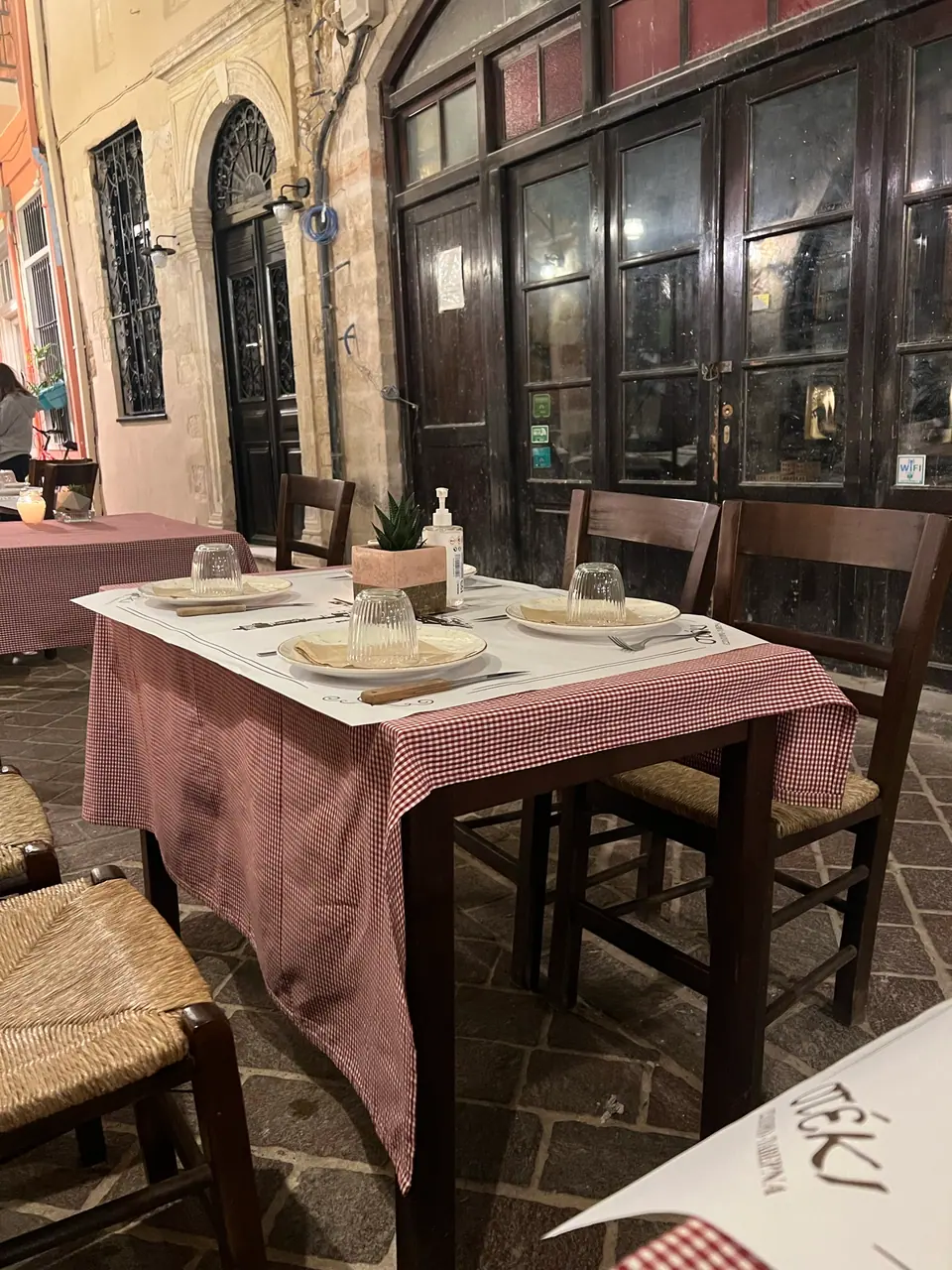
A restaurant in a converted Ottoman bath house built around 1400 and later used by the Turks from 1645. The building alone earns it a visit. The menu serves traditional Cretan cuisine with subtle eastern influences — the kind of food that reflects the city's layered history. The tables spill into the narrow cobblestone street in summer. Consistently listed among Chania's top tavernas for over 40 years.
Intimate, genuinely romantic setting with a kitchen that takes traditional Cretan ingredients and does something quietly creative with them. Start with the Graviera saganaki in panko crust with red pepper jam. Then the village lamb — possibly the best-cooked lamb in Chania. Everything ends with raki and dessert on the house. Book well ahead for weekends.
Directly on the beach, serving creative Mediterranean — familiar Cretan dishes reimagined with real skill. The dish to order is the seafood kritharoto: a Cretan take on risotto made with orzo pasta, prawns, saffron bisque, mussels and clams. The wine list is long and worth exploring. A kitchen that genuinely enjoys what it is doing.
The oldest bougatsa shop in Crete, opened in 1924, and still the best. One item: bougatsa chaniotiki — warm myzithra-filled phyllo squares under powdered sugar and cinnamon. The queue is usually out the door by 8am. Worth every minute of the wait. This is not a nice extra; it is obligatory.
Where to Eat by Neighbourhood
Venetian Harbour
The waterfront tavernas are touristy and priced accordingly — but the setting at sunset is undeniable. Use it for a drink rather than a full meal. Walk one block inland for the same food at a fraction of the price.
Jewish Quarter (Evraiki)
The backstreets behind the Etz Hayyim Synagogue are where the best restaurants hide — the Well of the Turk, Koupes, and several other local favourites. The streets are quieter and the food better than anywhere near the harbour.
Splantzia Square
The quieter eastern end of the Old Town. Great for morning coffee under the ancient plane tree, and dotted with small bakeries and cafés. Less visited than the harbour area — brings it closer to what daily life in Chania feels like.
Agora & Surroundings
The reopened Municipal Market plus the surrounding streets along Apokoronou St — home to Iordanis bougatsa and several specialist food shops selling local olive oil, herbs, raki and cheeses. The best concentrated stretch for food shopping in Chania.
What Things Cost in Chania (2026)
Cretan food remains good value. Note that since January 2025 Greece applies a Climate Resilience Fee per night on all accommodation — this does not affect restaurant prices.
| Item | Typical Price | Notes |
|---|---|---|
| Bougatsa (2 pieces) | €2.50–€4 | Iordanis and most bakeries |
| Dakos (starter) | €5–€8 | At any taverna |
| Saganaki | €6–€9 | Graviera or feta variety |
| Main course (taverna) | €12–€22 | Lamb, fish, or pasta mains |
| House wine (500ml carafe) | €8–€14 | Often local Cretan varieties |
| Raki shot | Free | Complimentary at meal end |
| Full mezze dinner for 2 | €40–€65 | With wine, at a good taverna |
| Guided food tour | €90–€140 | Per person, includes tastings |
| Wine dinner (Chania Wine Tours) | €90–€110 | Wine Dinner Under the Stars — book ahead |
Food Tours, Cooking Classes & Wine Experiences
The food scene in Chania rewards going beyond the menu. Three experiences worth booking in advance:
Food & Market Walking Tours
GetYourGuide lists several half-day tours that cover the Agora market, the Old Town bakeries, street food stops at Splantzia, and a sit-down mezze lunch at a local taverna. These typically run 3–4 hours and include all tastings. For first-time visitors, this is the fastest way to understand what you should be ordering for the rest of the trip. See our full Chania food tour guide for exactly what's included and whether it's worth booking.
Browse Food Tours →Chania Wine Tours — Manousakis Winery
Multiple visitors rate a wine dinner under the stars at Manousakis Winery, Chania's best-known organic producer, as one of the highlights of their entire trip. Guided winery tours with tastings run from 3 hours and include pickup from Chania. See our full wine & countryside tours guide for more options, including Dourakis Winery and a rural picnic tour. Book ahead in summer.
Find Wine Tours on GetYourGuide →Cooking Classes in Vamos Village
Several operators run half-day Cretan cooking classes in the traditional village of Vamos, 25km southeast of Chania. Participants make traditional dishes using local produce and recipes passed down through generations — and then eat everything they cooked. A great rainy-day activity and a genuine way to bring Cretan food culture home with you — our Chania cooking class guide compares the Vamos classes against the Old Town market-to-table ones on price and what you actually cook. Combine with a day trip inland to the White Mountains foothills.
Find Cooking Classes →Book Your Chania Trip
Find hotels near the Old Town and the best restaurants — Venetian Harbour boutiques, beach resort hotels, or luxury spa retreats. Start your search below.
Frequently Asked Questions
What food is Chania famous for?
Chania is famous for bougatsa chaniotiki (warm cheese-filled phyllo pastry under cinnamon and sugar), dakos (barley rusk bruschetta with tomato and myzithra), kalitsounia (small cheese pies), sfakianopita (pan-fried cheese pie with honey), and pichtogalo chanion — a creamy spreadable cheese unique to Chania with PDO protection that you cannot find outside Crete. The city also has a distinct version of boureki (courgette and potato bake with myzithra) that differs from the rest of the island.
Is the Chania Municipal Market (Agora) open in 2026?
Yes. The Chania Municipal Market reopened on 12 April 2026 after a four-year renovation closure. The city has committed to keeping it a genuine food market — local cheeses, olive oil, honey, fresh fish, herbs and regional specialities — rather than a tourist souvenir shop. It is located at Sofokli Venizelou Square, a 5-minute walk from the Venetian Harbour. Arrive early for the best fish selection.
Where should I eat in Chania Old Town?
The best restaurants in Chania Old Town are in the Jewish Quarter backstreets, not on the Venetian Harbour waterfront. The Well of the Turk (Greek-Turkish fusion, widely considered the best restaurant in the city), Tamam (traditional Cretan in a converted 14th-century Ottoman bath), Koupes (modern creative Cretan, best for a special occasion), and The Five (beachside Mediterranean) are the consistently highest-rated options. All require reservations in season.
What is dakos and where can I try the best version?
Dakos is a thick, twice-baked barley rusk soaked briefly in Cretan olive oil, then topped with crushed fresh tomatoes, crumbled myzithra cheese, oregano and more oil. It is present on almost every menu in Chania as a starter, best in summer when local tomatoes are at peak ripeness. The rusk should have a little resistance in the centre — not soggy. You will find a good version at almost every traditional taverna; there is no single "best" address — it is a dish that depends on the tomatoes more than the chef.
Is Chania expensive for food and drink?
No — Chania remains good value compared to most of western Europe. A full mezze dinner for two with house wine at a good Old Town taverna typically costs €40–€65 all in, including the complimentary raki and dessert at the end. Breakfast at Bougatsa Iordanis costs under €5. The waterfront restaurants near the Venetian Harbour charge premium prices for the setting — walk one block inland and the same meal costs significantly less. Note that since 2025, Greece charges a Climate Resilience Fee per night on accommodation — this does not affect restaurant prices.