Disclosure Some links on this page are affiliate links. If you book through them we earn a small commission, at no extra cost to you — it is what keeps this guide free and independent. How we make money.
Crete gets pitched to remote workers as a Mediterranean winter with cheap rent and good weather. Most of that is true. What the pitch leaves out is that Chania is a seasonal town, that a share of it closes between November and April, and that the community you are joining is smaller and quieter than the phrase "nomad hub" suggests. This guide covers both halves.
Quick Answer
Chania works well for a quiet, cheap, walkable winter and badly as a networking base. Fibre is widely available in the city, daytime highs of 15–18°C make midday genuinely pleasant, and monthly off-season rents are a fraction of summer. The trade-offs are real: a share of the Old Town closes from November, the nomad community is small and informal, heating is the cost nobody budgets for, and dark-by-17:30 December days are a bigger adjustment than the temperature. Heraklion is the more practical base; Chania is the nicer one.
The Honest Version, First
The case for a Cretan winter is genuinely strong. You get a walkable historic city where a 20-minute stroll replaces a commute, daylight temperatures that let you eat outside at lunchtime in February, food that is among the best in the Mediterranean and cheap with it, and rent that costs a fraction of what the same flat commands in August. The island is safe, the healthcare is functional, and the flight connection to Athens is short and frequent.
The case against is worth stating just as plainly:
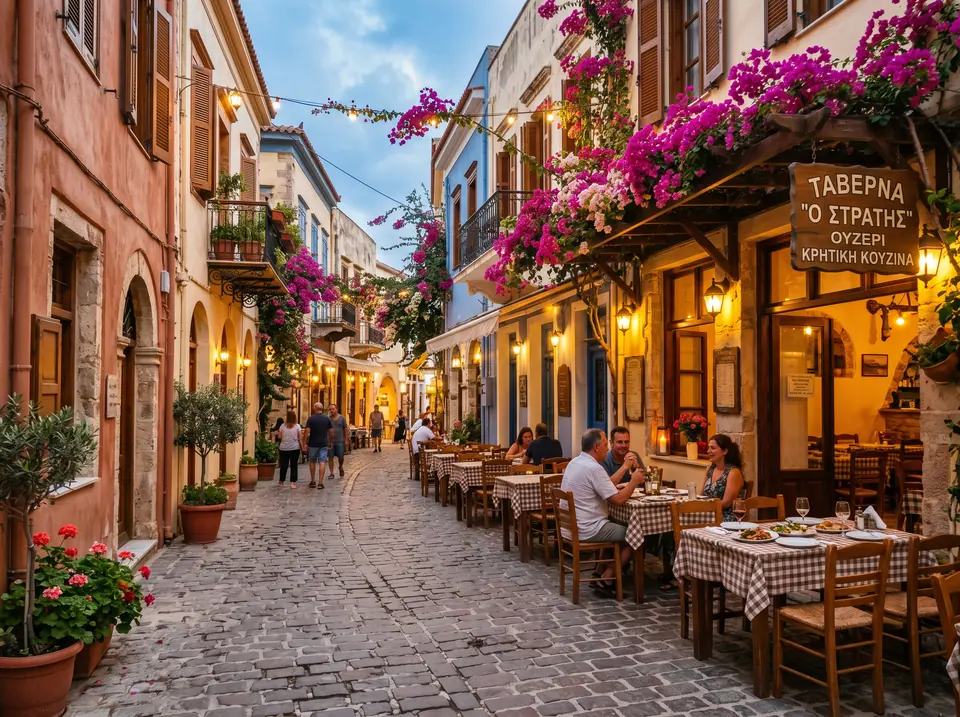
- Chania is seasonal, and winter shows it. A meaningful share of Old Town restaurants, bars and small hotels close from November to March. The city still works — it is a real town, not a resort — but the streets you walked in September will have shuttered frontages in January.
- The light is the real adjustment, not the cold. Sunset around 17:00–17:30 in December, combined with rain, produces the same short-day feeling you may have come to escape. It is warmer than northern Europe; it is not dramatically brighter in midwinter.
- Heating is a genuine expense and often a poor one. Greek housing is built to shed summer heat. Many flats have no central heating, relying on air-conditioning units in reverse or on oil-filled radiators, both of which are expensive to run. A cheap winter rent can be partly undone by the electricity bill.
- The community is small. There are remote workers here, and there are long-term expats, but this is not Lisbon or Las Palmas. If your working life depends on a coworking floor and a weekly meetup, calibrate expectations downward.
- Winter storms disrupt travel. Ferries cancel in bad weather and the seasonal flight network thins to Athens connections. Getting off the island in a hurry is harder than in summer.
None of that is a reason not to come. It is a reason to come with the right expectations, and to choose your city deliberately.
Internet: Good in the City, Not Outside It
Fibre has been rolled out widely across Chania, and a modern apartment in the city will generally give you a connection that handles video calls without drama. That is the headline, and it is real. The caveats matter more than the headline for anyone taking a long let:
- Old Town buildings are old. Some historic properties in the Venetian quarter are still on slower connections, and the picturesque flat is more likely to have the worse line. The new town is the safer bet for connectivity, and it is cheaper.
- Rural drops off fast. A village twenty minutes inland can be a different world for bandwidth. If you are picturing a stone house in the hills, verify the line before you sign anything.
- Ask for a speed test from the actual flat. Not the building, not the street, not the landlord's assurance. A screenshot from the property, taken in the evening when contention is worst, is the only useful evidence.
- Have a mobile fallback. Greek mobile data is fast and cheap, and tethering covers the day the line goes down — which, in a winter storm, it occasionally will.
Set the Mobile Fallback Up Before You Arrive
For a stay measured in months, an eSIM is the practical backstop for the days the flat's line drops — and it means you land connected rather than hunting for a shop. A regional Europe plan is usually better value than a Greece-only one if you expect to leave the country at all during the stay. Full detail in our eSIM and mobile data guide.
Where to Stay for a Month or More
The single biggest financial decision of a winter stay, and the one where the off-season advantage is largest. Nightly rates and monthly rents are different markets, and in winter the gap between them is enormous.
- The new town is where most long-stayers end up, and with good reason: better buildings, better internet, normal year-round shops and services, and considerably cheaper than the Venetian quarter. Less photogenic, far more liveable in February.
- The Old Town is the romantic choice and works if you find the right building. Watch for damp, poor heating and slow lines in the older stock, and accept that your immediate neighbourhood will be quiet in winter.
- Nea Chora and Koum Kapi sit between the two — a seafront walk into the centre, more residential, still walkable. A good compromise for a first stay.
- Halepa, east of the centre, is the handsome residential option: neoclassical streets, genuinely local, a longer but pleasant walk in.
Our where to stay guide covers the neighbourhoods in full, though it is written with shorter stays in mind.
A practical note on booking: the best monthly winter deals in Crete are not on international platforms at all. They come from local agencies, Greek-language listing sites, and word of mouth once you are here. A workable pattern is to book two or three weeks through a normal platform, arrive, and find the longer let in person — you will see the flat, test the internet, and pay less. Booking a six-month lease from abroad, sight unseen, is how people end up in a cold flat with a bad line.
Book the Landing, Not the Whole Winter
The reliable approach: secure two or three weeks before you fly, then find the long let on the ground once you can inspect the flat and test the connection. Off-season rates for that first block are low enough that the flexibility costs very little.
What a Winter Month Actually Costs
Rather than invent a budget, here is the shape of the costs and which ones surprise people.
- Rent is the big win. Off-season monthly rates are a fraction of the nightly-rate equivalent, and the same flat can differ several-fold between January and July. This is the entire financial case for a winter stay.
- Heating is the ambush. Budget for it explicitly. Greek electricity is not cheap and Greek flats are not insulated. Ask a prospective landlord what the previous winter's bills looked like — a reasonable question here, and the answer tells you a lot about the building.
- Food is cheap and good. Eating at tavernas regularly is affordable in a way it is not in northern Europe, and the winter menu is better value than the summer one. Markets are cheaper still.
- Transport is near-zero in the city, and real outside it. You will walk everywhere in Chania. If you want weekends in the mountains or on the south coast, a winter car hire at monthly rates is the cheapest it ever gets.
- Imported goods and electronics cost more than you are used to. Bring what you depend on.
Working From Cafés, Off-Season
Chania has no shortage of cafés; it has a shortage of cafés that are open in January and relaxed about laptops. Greek café culture is social rather than solitary, and a table occupied for four hours by one person and one coffee is tolerated more in some places than others. The reliable pattern: buy something every hour or so, avoid the lunch rush, and do not treat a small family place as an office.
The covered Agora surrounds
The cafés on the streets around the market keep year-round hours and fill with locals rather than visitors. Good for an hour with a laptop; not somewhere to camp all day.
Splantzia square
The quarter's cafés are the most laptop-tolerant in the Old Town and stay open through winter. Power sockets are hit and miss — scout before you commit to a morning.
The new town, around Tzanakaki
Away from the tourist streets, so open year-round with normal city hours and faster, less contended wifi. Less picturesque, considerably more practical.
Nea Chora seafront
Pleasant on a bright winter morning and genuinely quiet, but several places here are seasonal. Check before relying on one.
Formal coworking exists in Chania but is limited and can itself be seasonal — worth confirming a space is operating before you build a routine around it. Heraklion has more of it, which is one of the clearer arguments for basing there.
The Community, Realistically
There is a remote-working population in Chania and it grows every year, but the accurate description is "small and informal" rather than "scene". In winter it overlaps heavily with the long-term expat community — northern Europeans who live here year-round — which is a different crowd from the three-month nomad circuit and, for many people, a better one.
How people actually find each other off-season: Facebook groups for expats in Chania and Crete, which remain the dominant local organising tool in Greece; the handful of year-round cafés where the same faces recur; language exchanges and Greek classes, which are a genuinely effective route in; and hiking groups, which are active precisely because winter is the good hiking season. If you are arriving alone, our solo travel guide covers the social side of the city more broadly.
Visas, Insurance and SIMs
Visas. Greece operates a digital nomad visa for non-EU nationals working remotely for employers or clients outside Greece, subject to an income threshold and documentation. EU, EEA and Swiss citizens need nothing and can stay indefinitely. Non-EU visitors without a visa are bound by Schengen's 90-days-in-180 rule, which a three-month winter sits exactly at the edge of — worth counting carefully if you have travelled in Schengen earlier in the year. Thresholds and requirements change; confirm current rules with the Greek consulate for your country rather than trusting any guide, this one included.
Insurance. A long stay is where standard travel insurance stops fitting — most policies are written for trips of a few weeks and many exclude working. Look specifically for a policy that covers the length of stay and does not void cover because you are earning while abroad. Our Crete travel insurance guide covers the general picture; for a multi-month working stay, read the policy wording on both duration and remote work before buying.
Connectivity. An eSIM before you fly, then a local Greek SIM once you are settled if the stay runs long — local monthly plans beat roaming rates for a three-month stay. See the eSIM guide.
Frequently Asked Questions
Is Chania good for digital nomads in winter?
For a particular kind of stay, yes. Fibre is widely available in the city, off-season monthly rents are a fraction of summer, 15–18°C days make lunchtime walks pleasant, and the Old Town is walkable enough that you need no car day to day. What Chania is not is a large hub — the winter community is small, informal and outnumbered by long-term expats and locals. If you rely on a dense coworking scene, Athens or Heraklion suits you better.
How good is the internet in Chania?
Good in the city, unreliable outside it. Fibre is widespread and a modern city apartment will handle video calls comfortably. But Old Town buildings are old and some are still on slower lines, and rural villages fall away sharply. Never take a long let on a listing's claim — ask for a speed test from the actual flat, taken in the evening, and carry mobile data as a fallback.
How much does it cost to live in Chania for a month in winter?
Substantially less than summer, which is the whole argument. A one-bedroom let monthly out of season costs a fraction of the nightly-rate equivalent in August, and the same flat can differ several-fold between January and July. Food, coffee and transport are cheap by northern European standards; imported goods and electronics are not. Heating is the cost people forget — many Greek flats are built for summer and heat poorly.
Can I get a long-stay visa for Greece as a remote worker?
Greece operates a digital nomad visa for non-EU nationals working remotely for employers or clients outside Greece, with an income threshold and documentation requirements. EU, EEA and Swiss citizens need nothing. Non-EU visitors without a visa are limited by Schengen's 90-days-in-180 rule, which a three-month winter stay sits right at the edge of. Rules change — verify current requirements with the Greek consulate for your country.
Is Chania or Heraklion better for remote work in winter?
Heraklion is the more practical base and Chania the more pleasant one. Heraklion is a working city of around 140,000 with no real off-season: services stay open, the airport has the better year-round network, and there is more of everything including coworking. Chania half-closes in winter, but what remains is more attractive, more walkable and cheaper. A common pattern is Heraklion first, Chania once you know what stays open.
More winter planning: Winter in Crete hub · Chania vs Heraklion as a base · Winter car hire · Winter hiking