Disclosure Some links on this page are affiliate links. If you book through them we earn a small commission, at no extra cost to you — it is what keeps this guide free and independent. How we make money.
The short version: the harbour promenade is flat and genuinely good, while the Old Town behind it is Venetian cobble and often not manageable in a wheelchair without help. Crete has Seatrac — a solar ramp system putting wheelchair users into the sea unaided — at several beaches including Nea Chora, ten minutes from the Old Town. Book step-free specifically rather than trusting an “accessible” tick box, and arrange an adapted airport transfer in advance, because they cannot be found on arrival.
The Honest Position
Crete is more accessible than its reputation suggests and less accessible than tourism marketing implies. Both halves of that matter, so this page tries to be specific rather than encouraging.
Greece has invested seriously in beach access over the last decade, and Crete has benefited — the Seatrac systems below are genuinely excellent and better than anything comparable in most of Europe. At the same time, a great deal of what people come to Chania for is a 16th-century town built on a slope, and no amount of investment changes cobblestones.
The practical consequence: a trip here works well if you plan around the split, and frustrates if you assume either extreme.
The Old Town and Its Cobbles
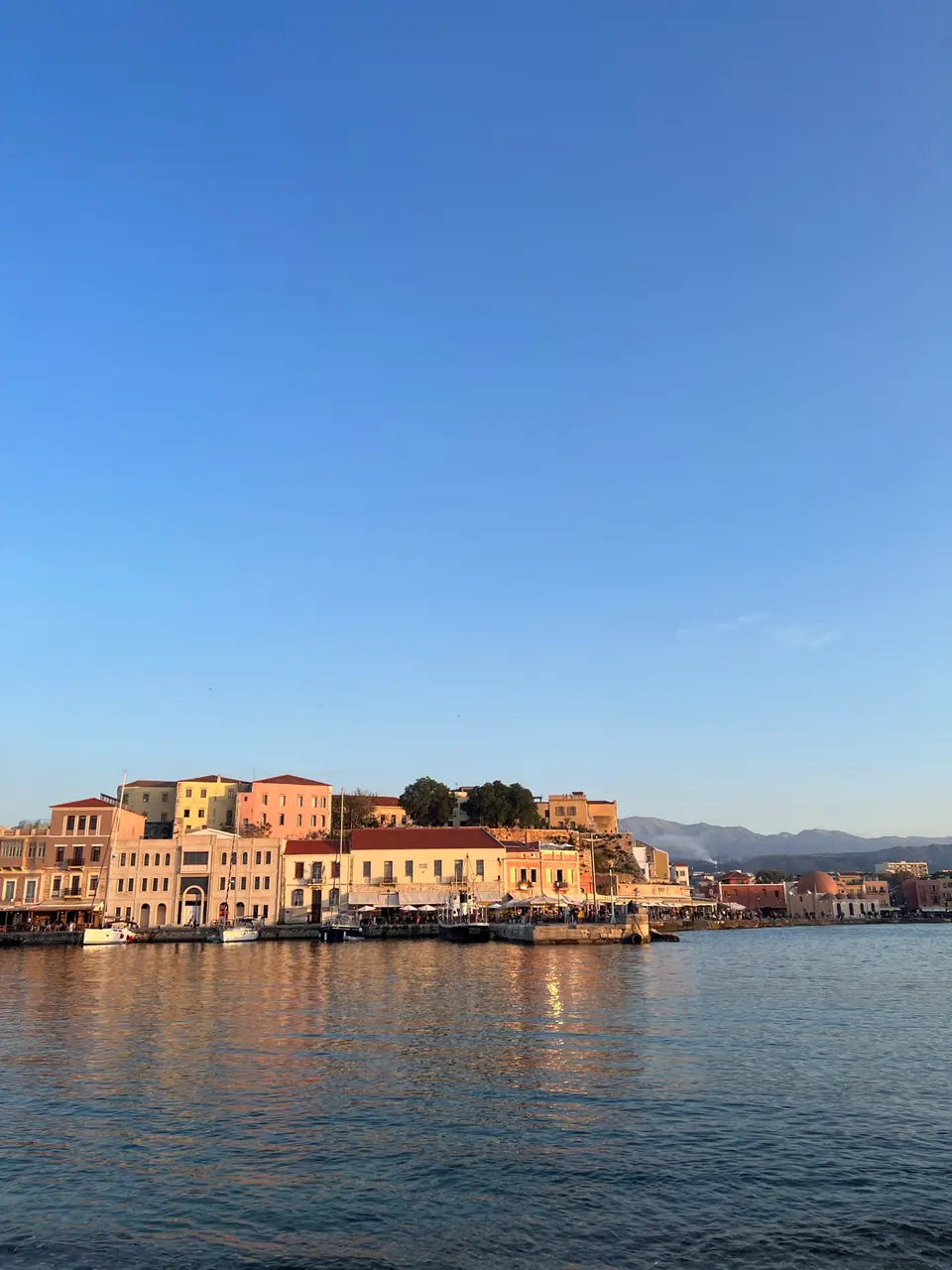
The harbour promenade is the good news. The curve of the Venetian waterfront is flat, wide, paved and continuous, with the harbour on one side and tavernas on the other. It is the best view in the city and it is properly rollable. Even the walk out along the mole toward the lighthouse is largely flat, though the surface roughens near the end and the final approach to the lighthouse itself is not level.
The lanes behind it are the bad news. Worn cobble and stone setts, frequently cambered, often narrow enough that a passing scooter is a problem, with kerbs that appear and vanish. Some sections are stepped. An independent wheelchair user will find much of it hard work; with a strong companion, more of it opens up. A powerchair with small front castors will struggle more than large wheels.
Modern Chania is easier. The newer shopping streets, Halepa and the approach to Nea Chora are conventional pavements with dropped kerbs in most places. The covered market is level inside with wide aisles and is one of the better Old Town experiences for anyone avoiding the lanes.
Beaches and Seatrac
This is where Crete genuinely outperforms expectations.
Seatrac is a Greek-designed, solar-powered system: a seat runs on fixed rails from the sand into the water, operated by the user, allowing an independent entry into the sea without being carried. Greece has deployed these widely and Crete has several installations.
Nea Chora is the one that matters most for anyone staying in Chania — an organised sandy beach about fifteen flat minutes from the Old Town, with Seatrac, seasonal boardwalks across the sand, accessible parking and facilities nearby. That combination, that close to a historic centre, is rare anywhere in the Mediterranean.
Two caveats worth planning around. Systems are seasonal and staffed, generally running through the summer within set hours, and they are occasionally out of service. Confirm locally on the day rather than building a single trip around one. And organised beaches beat wild ones reliably — boardwalks, platforms and toilets come with the concession, which is exactly what the beautiful remote coves lack.
Book step-free specifically, not “accessible”
The word covers everything from a full wet room to a single step at the entrance. Filter for accessibility, then message the property with your actual questions — door widths, lift access to the floor, level-access shower — before you pay.
Where to Stay
Area matters more here than almost any other consideration.
Nea Chora is the strongest all-round base: flat, close to the accessible beach, a short level route to the harbour, ordinary pavements, and easier parking than the Old Town. For most visitors with mobility needs, this is the answer.
The Old Town is the one to approach with caution. Many of its most attractive properties are converted Venetian houses with narrow stairs, no lift and thresholds that were never designed to be crossed on wheels. Some newer conversions have done it properly. The photographs will not tell you; the questions will.
The resort coast west of the city — Agia Marina, Platanias — has the newest buildings and consequently the most reliable lifts, level pool access and adapted bathrooms. The trade-off is that you are twenty minutes from the Old Town and will need transport for it.
Whatever the area, ask the property directly: the width of the doorways, whether there is a step into the bathroom, whether the shower is level-access or over a bath, whether a lift serves your floor, and whether the route from the street to reception has steps. A property that answers those precisely is usually one that has thought about it.
Getting Around and Transfers
Arrange the airport transfer before you fly. Adapted vehicles exist in Chania but there are not many, and they are not waiting at the rank. Book ahead, state whether you need a ramp or a lift, say whether the user transfers to a seat or stays in the chair, and give the chair's dimensions and weight. This is the single most important arrangement to make in advance — our transfers guide covers the general options and the airport guide covers the terminal.
Buses on the main urban routes are increasingly low-floor, but coverage is inconsistent and the long-distance KTEL coaches to the far beaches generally are not adapted.
Hire cars with hand controls can be arranged by some local operators given notice, but this is a book-well-ahead item rather than something to sort on arrival — see our car rental guide for how the local companies work.
Parking in and around the Old Town is the usual difficulty, and accessible bays exist but are limited. Nea Chora is easier on this count too.
Day Trips That Work
| Destination | Realistic? | Notes |
|---|---|---|
| Elafonissi | Yes, with planning | Flat, paved road, parking, seasonal boardwalks. Soft sand beyond them |
| Nea Chora | Yes | The easiest good beach day in Crete. Seatrac, flat, close |
| Lake Kournas | Partly | Lakeside path is level in parts; the shore itself is loose |
| Wine country | Often yes | Many estates are modern and level. Ask about the cellar route |
| Falassarna | Partly | Big flat sandy beach, road access, but limited hard surfacing |
| Omalos plateau | Yes, by car | Mountain scenery and the gorge viewpoint without the gorge |
What to Skip
Being direct saves a wasted day.
The Samaria Gorge — 16 km of rough one-way descent with stream crossings. Not adapted, not adaptable. The Omalos viewpoint by road is the alternative.
Seitan Limania — reached by a steep, loose scramble down a cliff path. Difficult for able-bodied visitors in sandals.
Balos overland — a rough unmade track then a long stepped descent. The boat from Kissamos is better but still involves boarding and a beach with no hard surfaces.
Most of the Old Town's upper lanes — the streets climbing away from the harbour get steeper and rougher, and the reward rarely justifies the effort.
None of this is a reason not to come. It is a reason to spend your days on the harbour front, at Nea Chora, in the market, at Elafonissi and in the wine country — which is a genuinely good week by any measure.
Accessible Chania: FAQ
Is Chania wheelchair accessible?
Partly, and the split is sharp enough to plan around. The waterfront promenade around the Venetian harbour is flat, wide and paved, and makes for a genuinely pleasant roll with the best view in the city. The Old Town immediately behind it is a different matter: Venetian and Ottoman lanes on worn cobble and stone setts, frequently narrow, often stepped, with kerbs that stop and start. Modern Chania outside the historic core — Nea Chora, Halepa, the newer shopping streets — is much easier.
What is Seatrac and which Crete beaches have it?
Seatrac is a Greek-designed solar-powered ramp that runs a seat on rails from the beach into the water, letting a wheelchair user enter the sea independently. Greece has installed it widely and Crete has several, including Nea Chora in Chania itself, which is the most convenient for anyone based in the city. Systems are seasonal, typically operating in the summer months and during staffed hours, and occasionally out of service, so it is worth confirming locally on the day rather than planning a single trip around it.
Are there accessible beaches near Chania?
Yes. Nea Chora is the standout for convenience — an organised sandy beach roughly a fifteen-minute flat walk or short roll from the Old Town, with Seatrac, boardwalks over the sand in season, accessible parking and facilities. Organised beaches generally do better than wild ones, because boardwalks, sunbed platforms and toilets come with the concession. The famous remote beaches are the opposite: Balos and Seitan Limania in particular involve rough descents and are not realistic.
Can wheelchair users visit Balos or Elafonissi?
Balos, realistically no — the overland route ends in a rough track and a long stepped descent, and the boat alternative involves boarding at Kissamos and a beach with no hard surfaces. Elafonissi is much better: it is flat, reached by a paved road with parking, and has boardwalking in season, though the sand beyond the boardwalk is soft and the lagoon crossing is not firm underfoot. Of the two famous beaches, Elafonissi is the one worth planning for.
Are there accessible taxis and airport transfers in Chania?
Adapted vehicles exist but are limited in number and cannot be relied on to be waiting at the airport. Book a wheelchair-accessible transfer in advance, specify whether you need a ramp or lift and whether the user will transfer to a seat, and give the dimensions of the chair. This is the single arrangement most worth making before you fly, because the fallback — finding an adapted vehicle on arrival at Chania airport — is not dependable.
Are Chania hotels genuinely accessible?
Standards vary widely and the word accessible is used loosely. Newer resort hotels on the coast west of the city tend to do this properly, with lifts, level pool access and adapted bathrooms. Old Town boutique hotels are frequently in converted Venetian buildings with narrow stairs, no lift and awkward thresholds, however charming. Ask specific questions — door widths, whether there is a step into the bathroom, whether the shower is level-access, whether there is a lift to that floor — rather than accepting a tick box.
Is the Samaria Gorge accessible?
No. It is a 16 km one-way descent on rough, rocky, uneven ground with stream crossings and a significant drop, and it is not adapted or adaptable. The nearby Agia Irini gorge is shorter but still unsuitable. For mountain scenery without the terrain, the drive up to the Omalos plateau reaches the gorge's viewpoint by road, and the White Mountains scenery from a vehicle is genuinely rewarding.
Related: where to stay in Chania compares the areas in full, the beaches guide covers which are organised and which are wild, and travel insurance matters more than usual if you are travelling with equipment.