Disclosure Some links on this page are affiliate links. If you book through them we earn a small commission, at no extra cost to you — it is what keeps this guide free and independent. How we make money.
The White Mountains — the Lefka Ori — rise almost 2,500 metres directly behind Chania and are riven by some of the most dramatic gorges in Europe. Hiking in Chania means following river-cut ravines from alpine plateaus all the way down to the Libyan Sea, passing abandoned villages, ancient cypress forests and crystal pools. Whether you want the bucket-list 16km descent of the Samaria Gorge or a gentle morning stroll to a taverna lunch, there is a trail here for you.
Best overall hike: Samaria Gorge (epic, 16km, full day). Best easy hike: Imbros Gorge (2–3 hours, family-friendly). Best half-day from Chania town: Therisso Gorge (30-min drive). Best time to hike: May, June and September — avoid July–August midday heat. Solid Samaria alternative: Agia Irini Gorge (quieter, same region).
Chania's Best Hikes at a Glance
Five gorges cover almost every level of walker. Here's how they compare before we go into detail.
| Hike | Distance | Duration | Difficulty | From Chania |
|---|---|---|---|---|
| Samaria Gorge | 16 km | 5–7 hrs | Moderate–Hard | ~50 min (Omalos) |
| Imbros Gorge | ~11 km | 2–3 hrs | Easy | ~1 hr (Imbros) |
| Aradena Gorge | ~7 km | 3–4 hrs | Moderate–Hard | ~1h 20m |
| Therisso Gorge | ~6 km | 2 hrs | Easy | ~30 min |
| Agia Irini Gorge | ~7.5 km | 3–4 hrs | Moderate | ~1 hr |
Want the logistics handled for you?
The Samaria hike ends at the coast, so you need a ferry and a bus to get back. A guided tour covers the early start, transport and return ferry in one booking — ideal if you'd rather not rent a car.
1. Samaria Gorge — The Legend
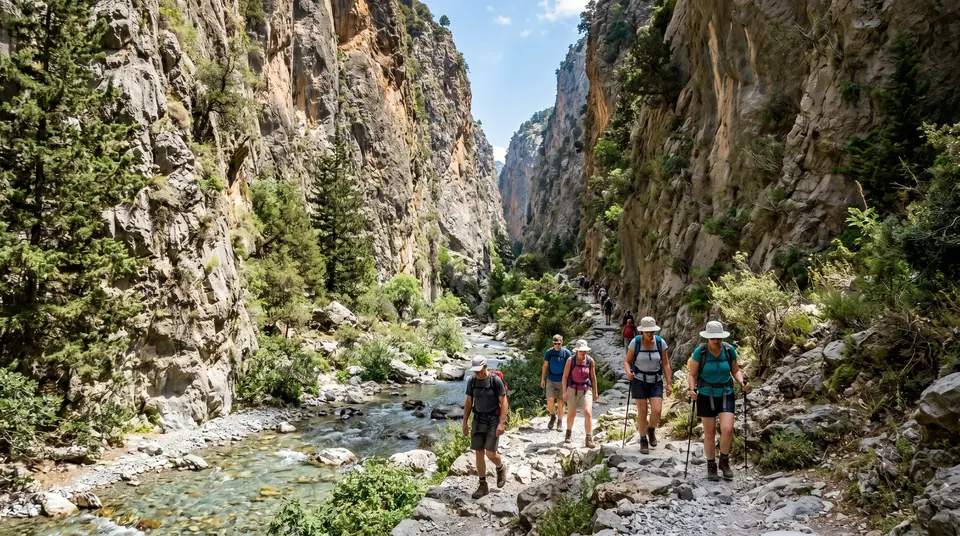
Crete's most famous hike and one of the longest gorges in Europe. You start at the Xyloskalo entrance on the Omalos plateau at 1,230m and descend 16km through a towering cypress-and-pine canyon to the village of Agia Roumeli on the Libyan Sea. The highlight is the "Iron Gates" (Sideroportes), where the walls narrow to just 3 metres apart and rise 500m vertically. It's a full-day, bucket-list walk.
Distance: 16 km (plus ~2km to Agia Roumeli village). Duration: 5–7 hours. Difficulty: Moderate–hard — long, rocky underfoot, and the relentless downhill is tough on the knees. Open: Roughly May–October only (daily warden decision). Fee: €5 entrance to the Samaria National Park.
How to get there: Drive to Omalos (Xyloskalo), about 50–60 minutes south of Chania. The hike ends at the coast, so the return involves a ferry from Agia Roumeli to Chora Sfakion (Sfakia) and a KTEL bus back. Many walkers simply join an organized tour to skip the logistics — see our full Samaria Gorge hike guide for the step-by-step.
2. Imbros Gorge — The Easy Alternative
Shorter, gentler and open year-round, Imbros is the go-to when Samaria is closed or when you want a relaxed half-day. The gorge itself is about 8km of twisting rock walls — in places narrow enough to touch both sides at once — and famously served as the evacuation route for Allied soldiers in 1943. Family-friendly and far less demanding than Samaria.
Distance: ~11 km total (8km gorge + return walk). Duration: 2–3 hours. Difficulty: Easy. How to get there: Drive to Imbros village on the road to Chora Sfakion (about 1 hour south of Chania); the trail ends near Komitades, so arrange a taxi or walk the road back to your car.
Need a car to reach the trailheads?
Most Chania gorges start deep in the Lefka Ori, an hour or more from town. A rental car gives you the early start and flexibility to combine Imbros with a swim at Frangokastello or lunch in Chora Sfakion.
3. Aradena Gorge — The Quiet Adventure
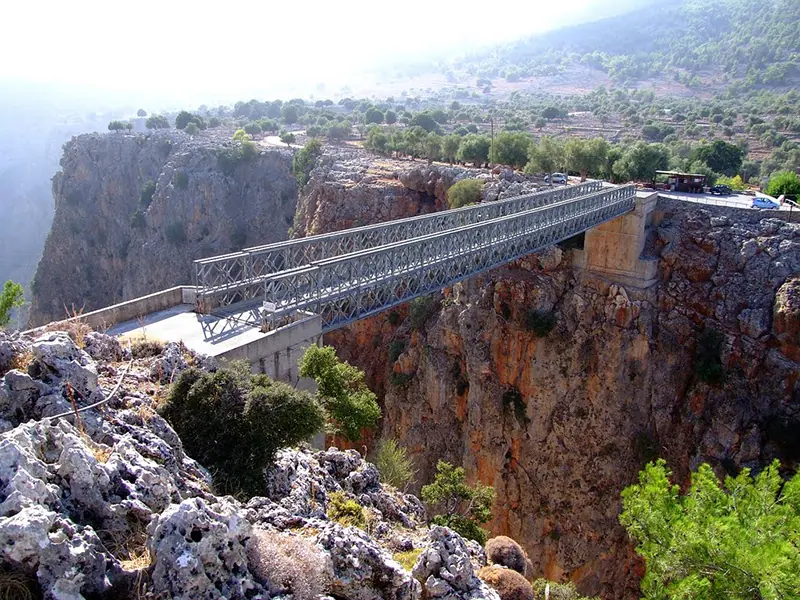
A wilder, much quieter alternative to Samaria, starting at the abandoned village of Aradena (and its famous steel bridge) and descending to the turquoise pools of Marmara Beach. There's some light scrambling and a steep initial descent, so it suits confident walkers. The reward is near-solitude and a swim at the end.
Distance: ~7 km. Duration: 3–4 hours. Difficulty: Moderate–hard (steep descent, some scrambling). How to get there: Drive to Aradena village, about 1h 20m south of Chania via the Vrisses–Aradhena road. From Marmara you can walk back over the cliff path or take a boat to Loutro and on to Chora Sfakion.
4. Therisso Gorge — The Closest Walk
If you're short on time or based in Chania town, Therisso is the easiest gorge to reach — just a 30-minute drive south. The dramatic narrow road to the village of Therisso threads between sheer rock walls, and you can either drive it, cycle it, or walk the 6km from the main road. Therisso village is famous as the launch point of Eleftherios Venizelos's 1905 revolution and has excellent tavernas — making this the best hike-and-lunch combination.
Distance: ~6 km. Duration: ~2 hours (or drive). Difficulty: Easy. How to get there: ~16km / 30 minutes south of Chania on the road to Therisso.
5. Agia Irini Gorge — The Quieter Samaria
Often recommended as the less-crowded alternative to Samaria, Agia Irini runs parallel to its famous neighbour on the western side of the Lefka Ori. It's a beautiful, green canyon of cypress and plane trees, part of the European E4 long-distance path, and sees a fraction of Samaria's footfall. Ends near the coastal village of Sougia, where you can swim before heading back.
Distance: ~7.5 km. Duration: 3–4 hours. Difficulty: Moderate. How to get there: Drive to the Agia Irini entrance near Sougia, about an hour south of Chania. A taxi or the Sougia bus connects the two ends.
When to Go Hiking in Chania
The hiking season in Chania runs from late April through October, with two genuinely excellent windows:
- May–June: Warm but not hot (20–28°C), the Samaria Gorge reopens, and the mountains are green and full of wildflowers. The best all-round hiking conditions.
- September–October: Cooler, the sea is at its warmest for an end-of-hike swim, and crowds have thinned. October mornings can be crisp — ideal on the trail.
Avoid midday hiking in July and August, when temperatures regularly exceed 35°C and the gorges become dangerously hot. If you must hike in peak summer, start before sunrise and carry extra water. For full month-by-month weather and crowd data, see our best time to visit Chania guide.
Hiking Tips & What to Pack
- Footwear: Sturdy, broken-in hiking shoes with grip — the Samaria path is relentlessly rocky.
- Water: 2–3 litres per person minimum; there are springs along Samaria but not all are potable.
- Sun protection: Hat, sunscreen and sunglasses — much of the gorge walking is exposed.
- Trekking poles: Highly recommended for the Samaria descent; saves your knees on 16km of downhill.
- Layer up: The Omalos start at 1,230m can be cold even in summer — bring a light layer for the morning.
- Start early: Especially on Samaria, to finish before the worst heat and the afternoon crowds.
Guided Hikes vs Going Independently
Samaria and Imbros are well-marked and don't strictly need a guide, but the Samaria logistics (ferry from Agia Roumeli, bus from Chora Sfakion, early start) are fiddly enough that many walkers prefer an organized tour — which also supports the local guiding economy. For Aradena and Agia Irini, a guided hike is sensible if you're new to Crete or want the best swim-and-lunch combinations stitched together. Browse guided hikes and outdoor tours on GetYourGuide, or sort your own transport with car rental in Chania.
Frequently Asked Questions
What is the best hike in Chania, Crete?
The Samaria Gorge is the most spectacular and famous hike in Chania — a 16km descent from the Omalos plateau to the Libyan Sea. For an easier, family-friendly alternative choose the Imbros Gorge (2–3 hours). For a quick half-day trip from Chania town, the Therisso Gorge is closest and can be combined with a taverna lunch in the village.
When is the best time to go hiking in Chania?
May, June and September are the best months to hike in Chania — warm but not brutally hot, with spring wildflowers in May and the first cool days in September. Avoid July and August for any midday hiking; temperatures regularly exceed 35°C. The Samaria Gorge is only open from roughly May to October, depending on conditions and warden assessment.
Is the Samaria Gorge open?
The Samaria Gorge is typically open from early May to the end of October, but it closes whenever heavy rain or rockfall makes the path unsafe — the decision is made daily by the park wardens. Always check the official opening status the day before. In winter the gorge is closed. See our full Samaria Gorge guide for logistics, fees and the return ferry.
Do I need a guide to hike in Chania?
The Samaria and Imbros gorges are well-marked and do not require a guide, but an organized tour removes the logistics — the return ferry from Agia Roumeli, the KTEL bus connection and the early-morning start. For the quieter Aradena and Agia Irini gorges, route-finding is straightforward in season but a guided hike is sensible if you are new to Crete.
What should I pack for hiking in Chania?
Sturdy broken-in hiking shoes with grip, 2–3 litres of water per person, sun protection (hat, sunscreen, sunglasses), snacks and a small first-aid kit. Trekking poles help enormously on the long Samaria descent, which is tough on the knees. Bring a layer for early-mountain starts at Omalos, which can be cold even in summer.
How do I get to the Samaria Gorge from Chania?
Drive to the Xyloskalo entrance on the Omalos plateau, about 38km south of Chania (50–60 minutes by car). Public KTEL buses run from Chania bus station to Omalos in season. The hike ends at Agia Roumeli on the coast, so you return by ferry to Chora Sfakion (Sfakia) and then bus back to Chania — or join an organized tour that handles the whole loop.